
Rainstorm in a Jar: Exploring the Water Cycle!
Description: In this captivating experiment, you will create your very own rainstorm inside a jar and discover the fascinating process of the water cycle. Get ready to become a weather scientist as you observe condensation, precipitation, and evaporation right before your eyes. It’s time to make it rain and uncover the wonders of nature!
Scientific Principles:
- Water Cycle: You will learn about the natural cycle of water on Earth, including how water evaporates from bodies of water, condenses in the atmosphere to form clouds, and falls back to the Earth as precipitation.
- Condensation: By cooling down the air inside the jar, you will witness how water vapor transforms into liquid water droplets on the sides of the jar.
- Precipitation: As the condensed water droplets become heavier, they will fall back down as rain, mimicking the process of precipitation in the water cycle.
Equipment Needed:
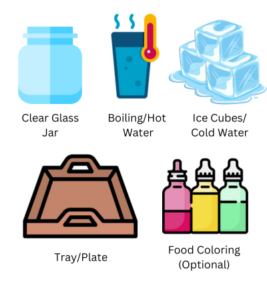
- Clear glass jar with a lid (e.g., a mason jar)
- Boiling water (obtained with adult supervision)
- Ice cubes or cold water
- Plate or tray to catch excess water
- Optional: Food coloring and small objects (e.g., toy figurines) for extra creativity
Difficulty Ratings: Equipment: ★★☆☆☆ (2/5) Experiment: ★★★☆☆ (3/5)
Instructions:
Step 1: Get ready! Gather all the materials listed above and find a safe and comfortable space to conduct your experiment.
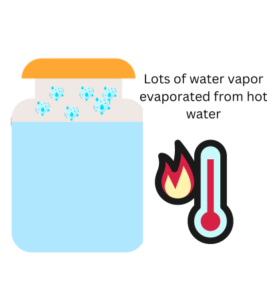
Step 2: Fill the jar. a) Carefully pour about one-third of boiling water into the glass jar. Remember to ask an adult for help with handling hot water. b) Optional: Add a few drops of food coloring to the boiling water for a colorful rainstorm effect.
Step 3: Cover the jar. Quickly place the lid on the jar, making sure it is tightly sealed.
Step 4: Prepare the rainstorm. a) Find a plate or tray to catch any excess water that may overflow from the jar during the experiment. b) Take a handful of ice cubes or cold water and place them on top of the lid of the jar. Make sure they are not touching the sides of the jar.
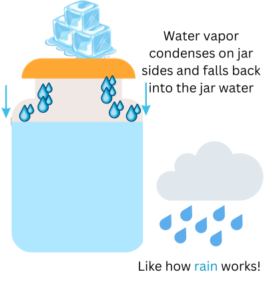
Step 5: Observe the rainstorm. a) Place the jar on the plate or tray. b) Watch closely as the cold air from the ice cubes or cold water meets the warm air inside the jar. c) After a few minutes, you will see water droplets forming on the sides of the jar. These droplets resemble condensation, similar to what happens in real clouds. d) As more condensation occurs, the water droplets will grow larger and eventually fall back down into the jar, resembling raindrops in a rainstorm.
Step 6: Keep observing. Continue to watch the rainstorm as the water droplets fall into the jar. Notice how the sides of the jar become wet from the condensation.
Step 7: Finish the experiment. Observe the rainstorm until the condensation stops and the jar returns to room temperature. You can carefully remove the ice cubes or cold water from the lid at this point.
Safety Tip: Always handle hot water with adult supervision to avoid accidents.
Enjoy the fascinating experience of creating your own rainstorm in a jar! Observe the water cycle in action as you witness condensation, precipitation, and evaporation. Remember to share your rainy adventure with your family and friends!
Simple Explanation:
In the “Make it Rain” experiment, when we put cold ice cubes on top of the jar, the warm air inside the jar cools down. When warm air gets cold, it can’t hold as much water. So the water in the air changes into tiny droplets, just like when you see fog or mist. These droplets stick to the sides of the jar and look like raindrops. It’s like having your own mini rainstorm right inside the jar!
Detailed Explanation:
The “Make it Rain” experiment demonstrates the water cycle process. When we add boiling water to the jar and cover it, the warm air inside the jar holds a lot of water vapor. When we place cold ice cubes on top of the lid, the air inside the jar quickly cools down. As the temperature drops, the warm air can’t hold as much water vapor anymore, so the excess moisture starts to condense on the cool surface of the jar.
The water vapor molecules in the air slow down and come closer together, forming tiny droplets of liquid water. These droplets stick to the sides of the jar, resembling the clouds in the sky. As more condensation occurs, the droplets grow larger and eventually become heavy enough to fall back into the jar, just like rain falling from the clouds in the sky.
This experiment helps us understand how the water cycle works, with evaporation from bodies of water, condensation to form clouds, and precipitation (rainfall). It shows how changes in temperature and the cooling of air can lead to the formation of rain.