

Sun-Powered Snacks: Let’s Cook with a Solar Oven!”
Description:
Get ready for a sunny culinary adventure! In this super-simple experiment, we’ll harness the power of the sun to cook delicious treats using a solar oven. You’ll learn about the energy from the sun and how it can be converted into heat. Get ready to be a solar chef!
Scientific Principles:
- Solar Energy: This experiment will teach you about harnessing the energy from the sun. The sun’s rays contain heat energy, and we’ll learn how to capture and use that energy for cooking.
- Heat Transfer: We’ll explore how heat can be transferred from the sun to our food through the greenhouse effect. The solar oven traps the sun’s heat, creating a warm environment for cooking.
Materials Needed:
- Cardboard box with a lid
- Aluminum foil
- Plastic wrap
- Black construction paper
- Scissors
- Tape
- Thermometer (optional)
- Oven mitts (for safety)
Equipment Difficulty Rating:
Obtaining the equipment: 2/5 (Most items can be found at home or easily acquired.)
Completing the experiment: 3/5 (It’s straightforward and safe, suitable for middle-aged children.)
Note: Adult supervision may be required, especially when using sharp scissors and handling the oven when it gets hot.
Steps:
- Get Ready: Find a safe and sunny outdoor location to conduct the experiment. Make sure you have all the materials in front of you.
- Prepare the Box: Take the cardboard box and remove any flaps or openings. You want a solid base for your solar oven.
- Line the Box: Use aluminum foil to cover the inside of the box, including the bottom and sides. This will help reflect and trap the sun’s heat.
- Create the Window: On the box’s lid, draw a square or rectangle shape using a pencil. Ask an adult to help you carefully cut along three sides of the shape, leaving one side attached as a hinge. This will create a window for sunlight to enter.
- Add Insulation: Line the inside of the box with black construction paper. This will absorb heat and help retain it inside the oven.
- Cover the Window: Place a sheet of plastic wrap over the window opening on the box’s lid. Secure it in place using tape, ensuring there are no gaps or holes.
- Preheat the Oven: Position the solar oven in direct sunlight, making sure the window opening is facing the sun. Allow the oven to preheat for 10-15 minutes.
- Cook your Snack: Place your chosen snack, such as s’mores or a marshmallow, on a plate or in a heat-resistant dish. Open the lid of the solar oven, carefully place the plate/dish inside, and close the lid.
- Wait and Observe: Leave the solar oven in the sunlight for about 10-20 minutes, depending on the intensity of the sun. Keep an eye on the snack and monitor its cooking progress.
- Enjoy the Sun-Powered Snack: Once the snack is cooked to your liking, carefully remove it from the solar oven using oven mitts or tongs. Let it cool down before eating, and savor your delicious sun-cooked treat!
Note: Always practice caution and handle the solar oven and hot surfaces with care. Adult supervision is recommended throughout the experiment.
Simple Explanation:
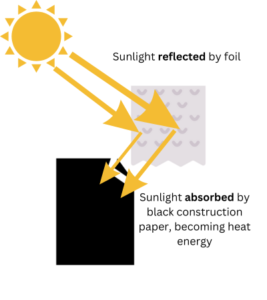
In our Sun-Powered Snacks experiment, we use the sun’s energy to cook our food. The solar oven we create acts like a special oven that captures the heat from the sun. The aluminum foil inside the box reflects the sun’s rays, making the inside of the oven warm. The black construction paper absorbs the heat, making it even hotter. When we put our snack inside and close the lid, the heat gets trapped and cooks our food, just like an oven!

Detailed Explanation:
During the Sun-Powered Snacks experiment, we explore the science of solar energy and heat transfer. The aluminum foil lining the solar oven reflects sunlight into the box, while the black construction paper absorbs the sunlight and converts it into heat energy. This creates a warm environment inside the oven.
When we place our snack inside the oven and close the lid, the plastic wrap on the window helps trap the heat inside. The trapped heat then transfers to our food, cooking it slowly and gently. The longer we keep the oven in the sunlight, the more heat energy it absorbs, leading to the cooking of our snack.
The solar oven demonstrates how sunlight can be harnessed and converted into heat, allowing us to cook food without the need for electricity or gas. It’s a fascinating example of utilizing renewable energy sources and understanding heat transfer principles.