
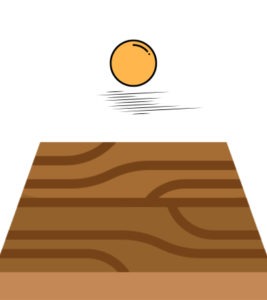
Flying High – The Levitating Ping Pong Ball
Description:
Welcome to the exciting world of levitating ping pong balls! In this experiment, you’re going to make a ping pong ball float using nothing but a plastic bottle, a bendy straw, and the power of your own breath. If you want to see the magic of air pressure in full action, you can also use a hairdryer!
Scientific Principles:
-
Air Pressure: When air is moving, it creates an area of low pressure. This difference in pressure can make objects like our ping pong ball float in the air.
-
Bernoulli’s Principle: This scientific law explains how a moving fluid (like air from our lungs or a hairdryer) can create a pressure difference, which can lift or move objects.
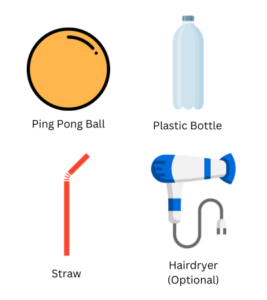
Equipment Needed:
-
A lightweight ping pong ball
-
A plastic bottle (an empty water bottle works great)
-
A bendy straw
-
A hairdryer (optional)
Equipment Difficulty Rating: 1
These are common household items that should be easy to gather.
Experiment Difficulty Rating: 2
The experiment is pretty simple but will require some coordination to blow air through the straw while keeping the ball in place.
Step-by-Step Instructions:
Step 1: Gather Your Materials First, we need to get everything ready. You will need the following items:
-
A lightweight ping pong ball
-
An empty plastic water bottle
-
A bendy straw
-
A hairdryer (This is optional. Ask an adult if you can use one.)
Step 2: Prep Your Bottle Ask an adult to help you make a small hole in the side of the plastic bottle near the bottom. The hole needs to be just big enough to snugly fit the bendy part of your straw.
Step 3: Insert the Straw Take your bendy straw and push the bendy part into the hole you made in the bottle. Make sure the long, straight part of the straw is sticking up.
Step 4: Drop the Ball Put the ping pong ball into the bottle from the top. It should rest at the bottom of the bottle, ready for liftoff!
Step 5: Start Blowing Now, take a deep breath and blow into the straw. Remember to blow, not suck. You don’t want to drink the ping pong ball! As you blow, you’ll see the ball start to float and dance inside the bottle.
Step 6: Understand the Magic Is it magic? Nope, it’s science! When you blow air into the bottle, the moving air creates a zone of lower pressure. This lower pressure lifts the ping pong ball and keeps it floating as long as you keep blowing.
Optional Step: Using a Hairdryer If you have a hairdryer and an adult who says it’s okay to use, you can try this experiment without the bottle and straw. Here’s how:
-
Plug in the hairdryer and turn it on to the coolest setting (we don’t want to melt the ping pong ball).
-
Point the hairdryer upwards, straight towards the ceiling.
-
Carefully place the ping pong ball in the stream of air blowing from the hairdryer.
-
If everything goes right, your ping pong ball should float in the air stream!
Whether you’re using your breath and a straw or a hairdryer, you’re seeing the power of air pressure in action. You’re becoming a real scientist, and that’s even cooler than magic!
Simple Explanation:
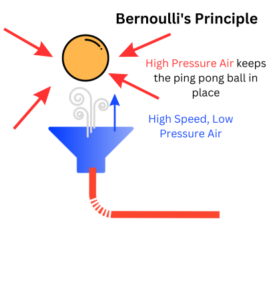
Have you ever blown up a balloon and then let it go? It flies around everywhere, right? That’s because of the air rushing out. In our experiment, when you blow air into the bottle or when the hairdryer blows air up, it’s like the air rushing out of the balloon. It’s moving fast, and this makes it push less on things around it. This is what we call low pressure. The air outside the bottle or around the hairdryer isn’t moving as fast, so it pushes harder, and we call this high pressure. The ping pong ball gets caught in the middle. The high pressure air wants to get to where the low pressure is, and it pushes the ping pong ball up and keeps it there. That’s how we make the ball float!

Detailed Explanation:
This experiment is a perfect demonstration of Bernoulli’s Principle. Bernoulli’s Principle states that as the speed of a moving fluid (liquid or gas) increases, its pressure decreases. When you blow into the straw or when the hairdryer is turned on, it makes the air move quickly. This fast-moving air has lower pressure than the still air around it.
When the ping pong ball is in the stream of low-pressure air, the higher pressure air outside the stream pushes on the ball. This higher pressure air pushes the ball back into the low-pressure area. This difference in pressure keeps the ball floating in the air.
When you stop blowing or turn off the hairdryer, the air pressure equalizes, and gravity pulls the ping pong ball back down. So, it’s a game between the pressure difference and gravity, and this experiment lets you see the balance between them in real-time!